(1) Research by design, (2) methodological inquiry, and (3) spatial research are three interrelated research streams.
(1) Building Counterintuitively: The Strip Mall as Civic Reserve?
Funded by the Austrian Research Promotion Agency (FFG) and conducted at TU Graz from 2022 to 2025, this research investigated the latent civic affordances of commercial strip-mall typologies. Their sustainable regeneration is understood as an evolutionary and interdisciplinary process—not as an alibi for starting from scratch.
![]()
Fig. 1. Design as a Method of Inquiry: From Commercial Real-Estate Type to Peripheral Monument—Testing the Civic Potential of Transformation and Reuse
![]()
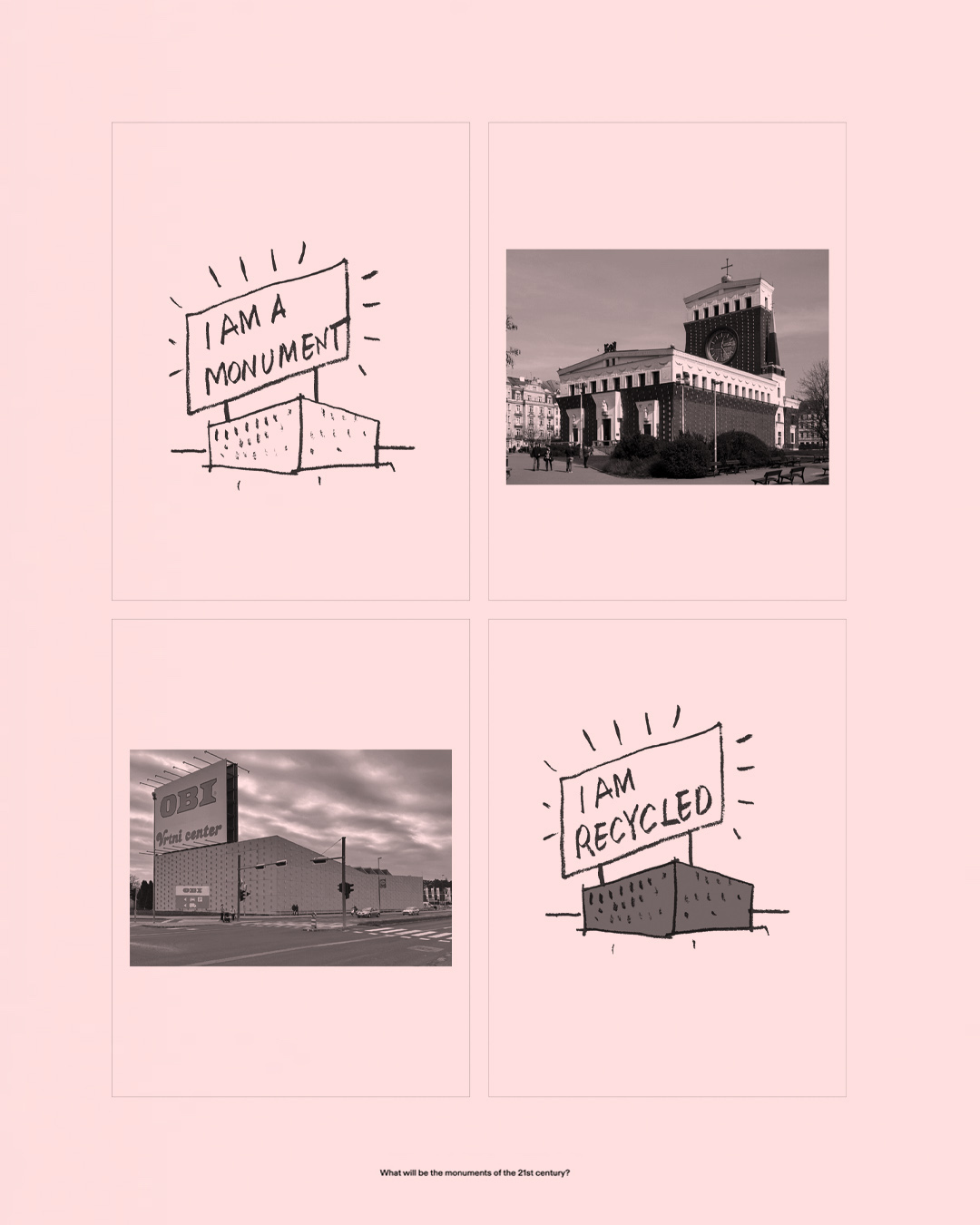

Fig. 2. CBT: Matrix with different transformation scenarios for existing strip malls in Austria.

Fig. 3. This research examines how low-status, car-oriented, and frequently monofunctional structures can be read typologically and transformed into more adaptable, socially productive, and environmentally responsible forms of architecture. Rather than dismissing these strip-like agglomerations as contingent accumulations or obsolete structures awaiting demolition, it approaches them as repositories of spatial, structural, and material intelligence whose latent capacities can be reactivated through design.
Can the transformation of commercial and strip-mall typologies become a means of identifying and developing new elements of civic architecture within the ordinary fabric of the contemporary periphery? Existing commercial and infrastructural types are reconsidered as frameworks for new forms of collective use, including light industry, laboratories, offices, production, and other shared programmes. Their spatial, typological, and programmatic capacities are diversified through strategies of retrofit, modification, extension, and localised replacement, while existing material, infrastructural, and ecological resources are retained and strengthened.
The research project Counterintuitive Building Types (CBT) examined commercial and retail properties built on greenfield sites and organised primarily around car access. Rather than treating these structures as obsolete, the project considered their buildings, envelopes, land, and infrastructure as resources for continued transformation. It developed scenarios ranging from continued use and retrofit to more extensive forms of adaptation for community facilities, logistics, sport, leisure, work, and experimental residential occupation.
These scenarios were assessed in collaboration with specialists in structural engineering, building physics, life-cycle assessment, economics, and real-estate practice. Spatial quality and potential uses were evaluated alongside energy demand, material expenditure, environmental impact, and cost, with the assumptions underlying these assessments made explicit. The project therefore addressed both what existing buildings make possible and what material, technical, economic, and regulatory conditions would be required to realise those possibilities.
A follow-up research project, CBT-NEXT, has since been submitted to the FFG’s TIKS programme with support from TU Graz seed funding. It extends this work toward a more systematic transformation toolkit for existing commercial building stock. The three-year CBT-research project selected commercial and retail properties to provide empirical foundation as existing structures and resources for case studies that convert and further develop them towards more positive energy, use, and life cycle balances. “Placemaking” transforms the underperforming properties into more active and attractive places of higher experiential density and environmental relevance through multiplication of spaces and uses in the interior and exterior areas, demonstrating opportunities for more sustainable development of these understudied building typologies.
Andreas Lechner (PI)
Project Partner
- Graz University of Technology - Institute for Design and Building Typology
- Graz University of Technology - Institute for Structural Design
- Graz University of Technology - AG Sustainable Construction
- University of Natural Resources and Applied Life Sciences Vienna BOKU - Department of Spatial, Landscape and Infrastructure - Institute for Spatial Planning, Environmental Planning and Land Use Management
- WMV Immobilien AG
CBT is funded by the Austrian Research Promotion Agency FFG
· Project Number #4425025 · ︎︎︎ Final Report (German)
Counterintuitive Typologies
TU Graz Research Group
Associate Professor
Dr. Andreas Lechner
Copyright
The information provided by the individual institutes and other facilities of Graz University of Technology as well as the other information providers is compiled independently by them, and entered into the system.
© Copyright unless otherwise indicated of Graz University of Technology, and of Andreas Lechner or the authors.
Privacy Statement · Datenschutzerklärung
For more information on privacy:
http://datenschutz.tugraz.at
Supported by cargo.site
Last update: 01/08/2026
Funded by FFG
Austrian Research Promotion Agency
![]()
![]()
TU Graz Research Group
Associate Professor
Dr. Andreas Lechner
Copyright
The information provided by the individual institutes and other facilities of Graz University of Technology as well as the other information providers is compiled independently by them, and entered into the system.
© Copyright unless otherwise indicated of Graz University of Technology, and of Andreas Lechner or the authors.
Privacy Statement · Datenschutzerklärung
For more information on privacy:
http://datenschutz.tugraz.at
Supported by cargo.site
Last update: 01/08/2026
Funded by FFG
Austrian Research Promotion Agency


Liability
The entire content of the Counterintuitive Typologies website has been compiled with the greatest care and to the best of our knowledge. However, we can assume no liability for the actuality, completeness and correctness of all the web pages. Content shall be removed immediately from the time that knowledge of a specific infringement of rights is obtained; TU Graz shall not be held liable before this time.
This website contains links to the websites of third parties; TU Graz has no influence over the content of such websites and shall therefore assume no liability for them.
The relevant information provider of the website shall be held responsible for the content and correctness of this information. When the link to the website of the third party was inserted, no infringements of rights were discernible. If TU Graz is made aware of an infringement of rights, the relevant link shall be removed immediately.
The content and works published on this website are subject to copyright. Any kind of reproduction, editing, dissemination and any kind of use beyond the limits of the copyright shall require the prior written consent of the relevant author.
When a user visits a website of TU Graz, information about his/her access (for example, the date, time, page accessed) can be stored. This does not constitute any analysis of personal data (e.g. name, address or email address). If personal data is collected, this is done so with the prior consent of the website user. Any transmission of the data to third parties shall not take place without the user’s express consent.
TU Graz states explicitly that the transmission of data on the Internet (e.g. by email) can pose security risks. Complete data protection against access by third parties cannot be guaranteed. TU Graz shall assume no liability for any damage incurred as a consequence of such security risks. The use of published contact details by third parties for the purpose of advertising is explicitly prohibited. TU Graz reserves the right to take legal action in the event that unsolicited advertising information is sent (e.g. in the form of spam emails).
Contact
︎︎︎ andreas.lechner (at) tugraz.at ︎︎︎www.AndreasLechner.at